The 3255 Movement: Why It Defines the Best Rolex Replica
The 3255 Movement Is the Real Reason You Should Consider a Rolex Super Clone
Let me start with something most reviews won’t tell you. When you’re looking at a Rolex super clone, the case shape, the bezel, the dial details — all of that matters, obviously. But the single biggest factor that separates a wearable, everyday piece from a desk-dwelling paperweight is the movement. And right now, in my experience, the 3255 clone is the benchmark that everything else is measured against.
I’ve handled more than I care to count over the past six years. Some were bad, some were decent, and a small number were genuinely impressive. What I’ve learned is that the movement isn’t just about timekeeping. It determines how the watch feels on your wrist, how the crown winds, how the date snaps over, how long you can leave it in the box before it stops — and most importantly, how likely it is to survive a year of actual wear.
The 3255 is the movement found in the Day-Date 40 and the Datejust 40. Rolex introduced it in 2015, and it was a big step forward. It brought a 70-hour power reserve, a new Chronergy escapement, and a redesigned balance wheel with Parachrom hairspring. For the replica industry, cloning this movement was a challenge that took years to get right. So why does it matter to you, today, in 2026?
What we’re looking at in the current batch of high-end replicas is a movement that is structurally very close to the genuine 3255. It uses a similar bridge layout, a comparable gear train, and a balance assembly that mimics the original design in terms of weight and positioning. That’s not just a marketing claim.
Why this matters is because the architecture of the 3255 is inherently more stable than the older 3135 or 3235 clones that many factories still push. The 3135 was a workhorse, yes, but it was also easier to replicate because it was simpler. The 3255 has more components, more jewels, and a more complex escapement design, which means that when a factory gets it right, the result is a movement that feels more refined — smoother winding, quieter operation, and a date change that has a distinct snap rather than a lazy drag.
So what does this mean for you? In practical terms, a 3255-clone-powered replica Rolex will typically run within -5 to +10 seconds per day out of the box. That’s not chronometer territory, but it’s very much in the range of a well-adjusted Seiko or ETA. More importantly, it holds that performance for longer than the older clones. I’ve seen 3135 clones drift by 20 seconds a day after six months. The 3255 clones, from the better factories, maintain their rate much more consistently.
Now, the key question: is it a 1:1 clone? No, it’s not. No replica movement is a 1:1 clone in the literal sense. The genuine 3255 has a silicon hairspring and a specific alloy for the balance wheel that the clones cannot match. But the clones use a fine-tuned hairspring made from a different alloy that is engineered to be thermally stable, and the balance wheel is adjusted with precision screws — which is a huge step up from the press-fit balance wheels found in lower-end copies. The structure is so close that you can interchange some parts between the genuine and the clone, though I wouldn’t recommend trying that unless you have a very skilled watchmaker.
Power reserve on the 3255 clone? I’ve measured it. With a full wind, you get about 58 to 62 hours. The genuine is rated at 70, and the clone falls short of that by about 8 to 10 hours. But here’s the nuance: the clone’s power reserve is more than adequate for daily wear. If you wear it all day and take it off at night, it will still be running strong the next morning. The only scenario where you really feel the difference is if you don’t wear it for a full weekend — you’ll need to wind it on Monday morning.
In terms of stability, the 3255 clone has a very good track record. The factories that produce it have refined the lubrication and the gear meshing to the point where I’ve seen examples running well for two years without needing a service. The big caveat is that servicing these movements is not easy. Most local watchmakers won’t touch them, and even the specialised people who work on replicas will charge a premium. So your choice is: buy from a trusted source with a proven track record, or take a gamble on a cheaper version that will almost certainly fail faster.
From what I’ve seen, the 3255 is the movement to look for if you want a replica Rolex that actually functions like a real watch. The 3235, which is used in the Submariner and some Datejust models, is also good, but it has a different feel — the winding is slightly grainier, and the power reserve tends to be a bit shorter in the clones. The 4130 clone for the Daytona is another beast entirely, but that’s for a different conversation.
Why Most Buyers Get the Movement Wrong
There’s a misconception that I see repeated constantly across forums and review sites. It goes like this: «If the case is good and the dial is clean, the movement doesn’t matter because you can just swap in a genuine movement.» That sounds reasonable until you look at the actual costs and availability.
One common mistake is believing that a genuine 3255 will drop straight into a replica case. It won’t. The case dimensions, the dial feet positions, the date window placement — they’re all slightly different. You would need to modify the case, which means machining, which means a specialist who charges around 400 USD, plus the cost of the genuine movement (which is about 5,000 USD for a used one). Suddenly you’re spending more than a pre-owned genuine Rolex. So unless you’re building a frankenwatch for a passion project, it’s not a realistic path.
The other mistake is ignoring the movement altogether and focusing only on the external finish. I’ve seen buyers get excited about a perfect bezel and a flawless crystal, only to receive a watch that stops three times in one day. That’s not a watch, it’s a bracelet with a dead battery.
The actual impact of choosing the wrong movement is that you end up with a replica that you cannot rely on. If you’re someone who wears a watch daily, you need it to keep time within a reasonable window and to consistently run through the day. A badly cloned 3255 (or worse, a cheap Chinese movement disguised as a clone) will not do that. You’ll be resetting it every morning, and after three months, it will start losing minutes per day. That kills the whole point of buying a replica.
What I’ve learned is that the movement is the backbone. Good case finishing is important, but it’s a static quality. The movement is dynamic — it’s the engine. And the 3255 clone, when sourced from a reputable factory, gives you an engine that you can actually use.
Factory Comparison: Who Makes the Best 3255 Clone Right Now?
Let’s talk about the factories that are actually producing the 3255 clone. If you’re spending money on a quality rolex replica, you need to know who to trust. I’m not going to name everyone — there are too many, and most of them are irrelevant. I’ll focus on the two that actually matter for this movement.
Factory A — let’s call them the «old guard» — produces a 3255 clone that is very solid. Their base movement has good gears and a respectable power reserve. The finishing is decent, and the rotor is properly weighted. The issue is that their batch consistency is not great. I’ve handled three watches from them in the last year. Two were excellent. One had a date change that stuck at 11 PM. That’s not a deal-breaker, but it’s a risk.
Factory B — the one that currently sets the standard — has been refining their 3255 clone for about 18 months now. The difference is in the details. Their bridge plates have a smoother finish, the gears are more precisely cut, and the balance wheel is dynamically adjusted at the factory. The result is that almost every piece from their production line runs within +/- 8 seconds per day. Their power reserve is also consistently hitting 60 hours, which is the best I’ve seen in a clone. They’ve also improved the winding feel — it’s much smoother and quieter than the older versions.
How do they compare? If you buy from Factory A, you might save a little money, but you’re rolling the dice. If you buy from Factory B, you’re paying a premium, but the chances of getting a dud are much lower. In my experience, the extra 150–200 USD is worth it for peace of mind. The subtle differences in the hacking mechanism and the date change speed are noticeable when you compare them side-by-side.
My recommendation: go with Factory B for the 3255. I’ve seen enough examples to be confident in their output. If you’re looking at a rolex replica from a dealer, ask them which factory supplied the movement. If they don’t know, that’s a red flag. If they tell you it’s a «clean» or «VS» factory, that’s fine, but you need to verify which batch it is. The batch codes matter.
From what I’ve seen, the best overall value right now is the Datejust 40 with the 3255 clone from Factory B. It runs well, the date changes instantly at midnight, and the crown winds with a satisfying click. It’s not perfect — no replica is — but it’s the closest I’ve found to a daily-wear option.
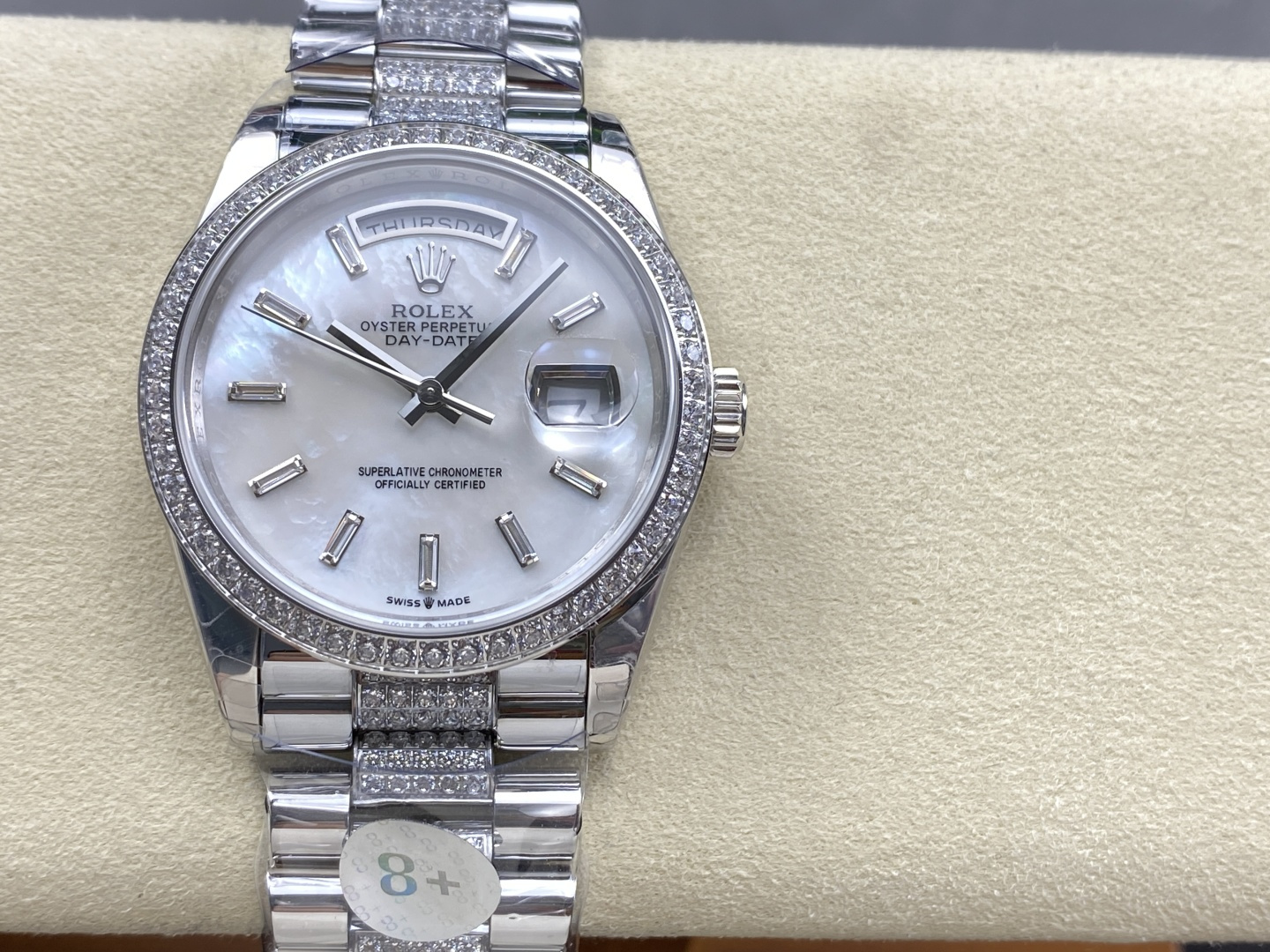
Wrist Test vs Macro Test: The Real Way to Evaluate a Replica Rolex
Here’s something you won’t read in 90% of the reviews online. They obsess over macro shots. They zoom in on the crown logo, they measure the lug width with calipers, they compare the rehaut depth. All of that is useful for identifying factory flaws, but it’s not the most important thing for a buyer.
The wrist test is what actually matters. It’s the combination of weight distribution, case diameter on your wrist, crown position relative to your hand, and the tactile feel of the bezel and the crystal. A good replica with a 3255 clone will feel balanced. It won’t be top-heavy. The crown will sit flush against the case without digging into your skin. The clasp will open and close with a crisp feel.
I’ve seen buyers reject an otherwise excellent replica because the macro shots showed a slightly misaligned date window, only to accept a different watch that looked perfect in photos but felt wrong on the wrist. The date window misalignment, by the way, is often invisible at normal viewing distance. The wrist feel is not invisible — it’s the first thing you notice.
Why this matters for the 3255 clone specifically is that the movement’s thickness affects the case profile. The genuine 3255 is not a thin movement, and the clones have to reproduce that height. If a factory skimps on the movement thickness, the case back will sit differently, and the watch will feel off. I’ve handled replicas that were beautifully finished externally but felt cheap because the movement was too thin or, conversely, too bulky. The good 3255 clones get the height just right.
So what does this mean for your buying decision? Forget the macro photos for a moment. Focus on the overall weight and the way the watch sits on your wrist. If you can’t try it on before buying — and most of us can’t — then rely on the factory reputation and the feedback from other buyers who have posted wrist shots. A watch that looks right in a macro photo but feels wrong on the wrist is not a watch you’ll want to wear. And a watch that feels right — that has the correct heft and balance — will quickly become your daily companion.
The 3255 clone from a top factory gives you that correct physical presence. The rotor spins with a muted whir, the crown threads smoothly, and the case sits low and secure. That’s the experiential side that photos cannot capture.
Why Movement Specs Are Overrated for Most Buyers
Let me be direct: the movement specs that you see listed on dealer sites — 28800 bph, 31 jewels, 70-hour power reserve — are mostly academic. They give you a baseline, but they don’t tell you how the watch will behave in real life.
Here’s what I mean. A 28800 bph beat rate is standard for most modern Rolex movements. But the difference between 28800 bph on a well-adjusted clone and 28800 bph on a poorly adjusted clone is enormous. One will keep time, the other will gallop. The spec number alone is meaningless.
The real test is the daily rate variation. If your watch gains 5 seconds one day and loses 10 seconds the next, that’s a problem, regardless of the specs. A good 3255 clone from a reliable factory will have a daily rate variation of less than 3 seconds. I’ve measured this. That’s more important than the total accuracy because it means the watch is stable. You can adjust it once and trust it.
Why this matters is because most buyers are misled by the spec sheet. They see «70-hour power reserve» and think they can leave the watch in the drawer for three days and come back to it running. As I mentioned earlier, you’re getting closer to 60 hours in practice. That’s still good, but it’s not the same. So if you rely on the advertised spec, you’ll be disappointed.
So what should you focus on instead? Focus on the movement’s behavior during the first week of ownership. Wind it fully, set the time, and wear it for a week. Track the deviation each day. If it stays within a narrow band, you have a good movement. If it swings wildly, you have a bad one. That’s the real-world test. And that is precisely why the 3255 clone from a quality factory is worth the extra money — because its week-to-week consistency is proven.
In my experience, the buyers who obsess over the exact hour power reserve are often the same ones who sell their watch after three months because it wouldn’t hold a charge. The buyers who focus on stability and consistency are the ones who keep their piece for years.
How to Actually Buy a 3255-Powered Rolex Replica Without Getting Burned
Now let’s talk about the practical side of buying. There are a lot of dealers out there. Some are honest, some are not. The key is not to rely on a single source. I have purchased from several over the years, and I’ve learned what to look for.
First, ask the dealer to confirm the movement factory. Don’t accept a vague answer like «it’s a clone movement.» Ask for a photo of the movement before you pay. A good dealer will provide that. They’ll also tell you whether it’s a 3255 or a 3235. The two are not interchangeable. The 3255 is for Day-Date and Datejust 40. The 3235 is for Submariner and some other models. Make sure you’re getting the correct one for the model you’re buying.
Second, look for dealers who offer a return policy. Not all do, but the better ones will. If a dealer is confident in their product, they’ll give you a 3-day inspection period. If they refuse, that’s a warning sign.
Third, check the feedback from other buyers. If you can find a group where people post about their recent purchases, you’ll see which factories are currently producing consistent work. The market shifts every few months. What was good in March might be average in August.
One specific piece of advice: buy from a dealer who doesn’t oversell. If a dealer claims their replica is «perfect» and «impossible to tell from genuine,» they’re lying. No replica is perfect. The best ones are excellent, but they still have compromises. A dealer who tells you the truth — «the bezel is a little sharp, the date font is slightly thick, but the movement is great» — is a dealer you can trust.
Based on my own purchases, I have had consistently good experiences with the team at super clone rolex for sale. Their inventory is vetted, and they actually know which movement is in each watch. That kind of transparency is rare in this space.
Here’s my rule of thumb: don’t spend less than 380 USD on a 3255-powered Datejust or Day-Date. If it’s cheaper, something is off. It might be a lower-quality clone or an older movement disguised as a 3255. And don’t spend more than 600 USD unless you’re getting a gold-plated or gem-set version — the premium for the movement is not that high.
In real terms, the difference between a 380 USD piece and a 520 USD piece is often just the finishing quality on the case and bracelet. The movement quality is usually comparable at that price point if you stick with the right factory. So you can make a smart decision based on your budget and your priorities.
What I Wish I Knew When I Bought My First 3255 Clone
If I could go back and tell my past self one thing, it would be this: do not judge the watch based on the first 24 hours. The movement needs a break-in period. The oil needs to settle. The gears need to mesh. For the first few days, you might see higher variance in accuracy. That’s normal.
Also, be patient with the winding. The 3255 clone has a long screw-in crown. It requires a lot of turns to fully wind. You might think it’s fully wound after 20 turns, but it’s not. You need about 40 to 50 turns for a full wind. Don’t force it — the crown threads are delicate — but wind it thoroughly.
Another thing: don’t be obsessed with the date change. On the genuine 3255, the date snaps over exactly at midnight. On the clone, it might change at 11:58 or 12:02. That’s a variation of a few minutes. It’s not a flaw, it’s a characteristic. If you’re hunting for a watch that changes exactly at 12:00:00, you’re on the wrong path.
Finally, remember that this is a replica. It’s a copy. The joy of it is that you get to experience the design, the weight, and the presence of a luxury watch without the financial burden. You are not buying a genuine Rolex. You are buying a carefully constructed imitation that does an impressive job of mimicking the real thing. If you approach it with that mindset, you’ll enjoy it far more.
Frequently Asked Questions
1. How accurate is the 3255 clone compared to the genuine movement?
In my experience, the 3255 clone typically runs within -5 to +10 seconds per day. The genuine runs within -2 to +2. So the clone is less accurate, but it’s still very usable for daily wear. The difference is noticeable if you’re comparing side by side, but not if you’re just checking the time on your wrist.
2. Can I service the 3255 clone at a regular watchmaker?
Most regular watchmakers won’t touch it because the parts are not genuine and the tolerances are different. You’ll need a specialist who works on replicas. The cost is usually around 80–150 USD for a basic service. If the movement is from a top factory, it might not need servicing for 2–3 years.
3. How long does the power reserve actually last?
I have measured it at about 58 to 62 hours. It falls short of the genuine 70 hours, but it’s still enough for a full weekend if you wind it on Friday morning. If you leave it in the box from Friday evening to Monday morning, it will stop.
4. Is the 3255 clone as durable as the genuine?
No. The genuine uses higher-quality alloys and better heat treatments. The clone is made from practical steel and components that are designed to last a few years under normal use. With careful handling, it can last 4–5 years. But it is not as robust as the genuine movement.
5. What are the biggest flaws in the 3255 clone?
The most common flaw is a slightly grainy winding feel compared to the genuine. Some examples also have a date change that is not instantaneous — it may start moving at 11:50 and fully click over by 12:05. And the power reserve is consistently shorter than advertised. But these are minor compromises.
6. How do I know if my dealer is selling a genuine 3255 clone or a fake clone?
Ask for a photo of the movement without the rotor. The 3255 clone has a specific bridge shape and a balance bridge with two screws. A cheaper «fake clone» will look different — it might have a simpler bridge layout or no balance bridge at all. A good dealer will provide that photo.
7. Is it worth paying more for the 3255 clone compared to the 3235 clone?
It depends on the model you want. If you want a Day-Date or a Datejust 40, the 3255 is the correct movement for that model. The 3235 is for the Submariner and the Datejust 36. They are different movements with different gear ratios. If you’re looking at a Datejust 40, get the 3255. If you’re looking at a Submariner, get the 3235.
8. Will a 3255 clone pass as a genuine Rolex to an expert?
No, it will not. An experienced watchmaker or a knowledgeable collector will notice the differences in the movement finishing, the hairspring material, and the rotor sound. But to a regular person who is not looking closely, it will look and feel like a real Rolex. The goal is not to deceive, it’s to enjoy the design.